Build
Collect the sets and runs required for each hand while keeping your options open.

Shanghai
A classic Shanghai-style rummy game for iPhone, built around strategic contracts, rapping, jokers, and computer opponents that think and react independently.
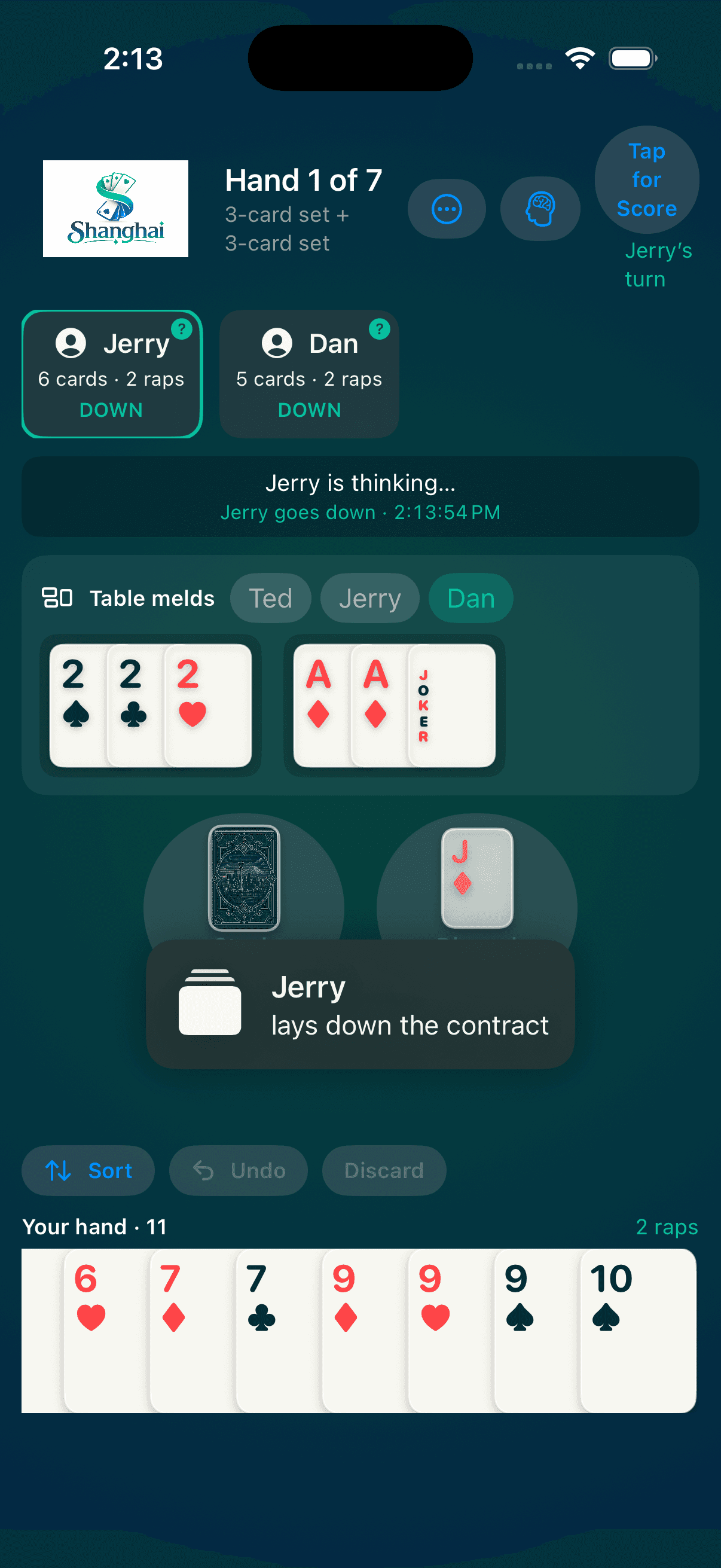
Play a four-hand or full seven-hand game against one to four computer opponents. Build the required sets and runs, decide when to go down, manage high-value jokers, and watch what the other players reveal along the way.
The computer players do not share one strategy. Each opponent has an individual personality, memory, skill profile, risk tolerance, and defensive style—so the player who raps aggressively may not be the one who remembers what you picked up three turns ago.
Collect the sets and runs required for each hand while keeping your options open.
Watch pickups, raps, melds, joker movement, and other public clues about what your opponents may be building.
Rap, defend, go down, hold back, play off the table, or push for a down-and-out finish.
Shanghai supports two complete game formats, both using 11-card hands, two standard decks, four jokers, and cumulative scoring. The four-hand game moves quickly through alternating set and run contracts. The seven-hand game builds toward increasingly demanding combinations.
A shorter game built around two-set, two-run, three-set, and three-run contracts.
The full sequence, progressing through mixed set-and-run contracts before the final three-run hand.
Cards left in your hand count against you when another player goes out. Scores accumulate across the entire game.
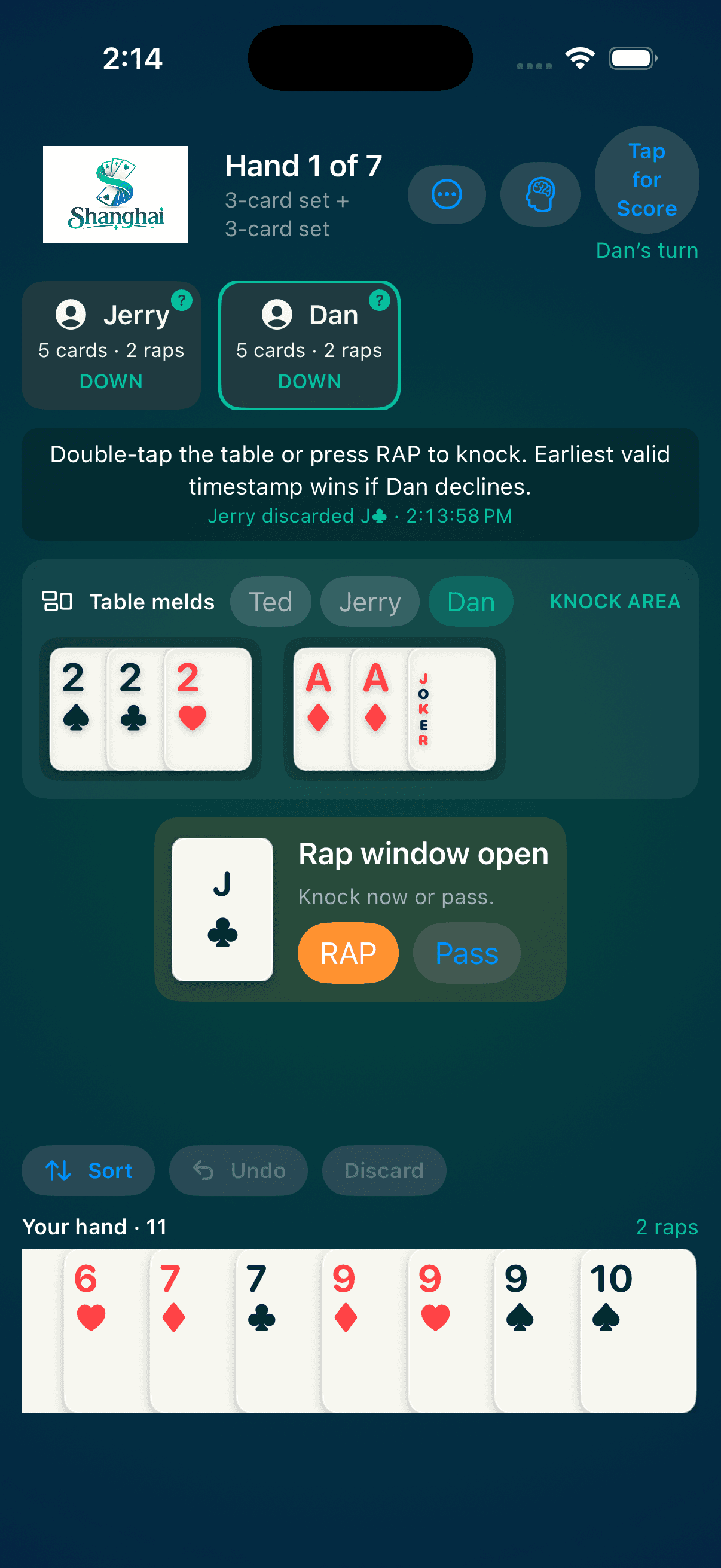
See a discard you want before your turn? Knock.
Shanghai includes the game’s distinctive rap mechanic. An eligible player can rap for a discard, but the next player still has first refusal. If that player declines, the earliest valid rapper receives the discard plus two additional cards—and spends one of only two raps available for the hand.
The result is more than another way to draw. A rap can expose what someone wants, create a much larger hand, invite a defensive pickup, or turn a weak hand into something entirely different.
Inside Shanghai
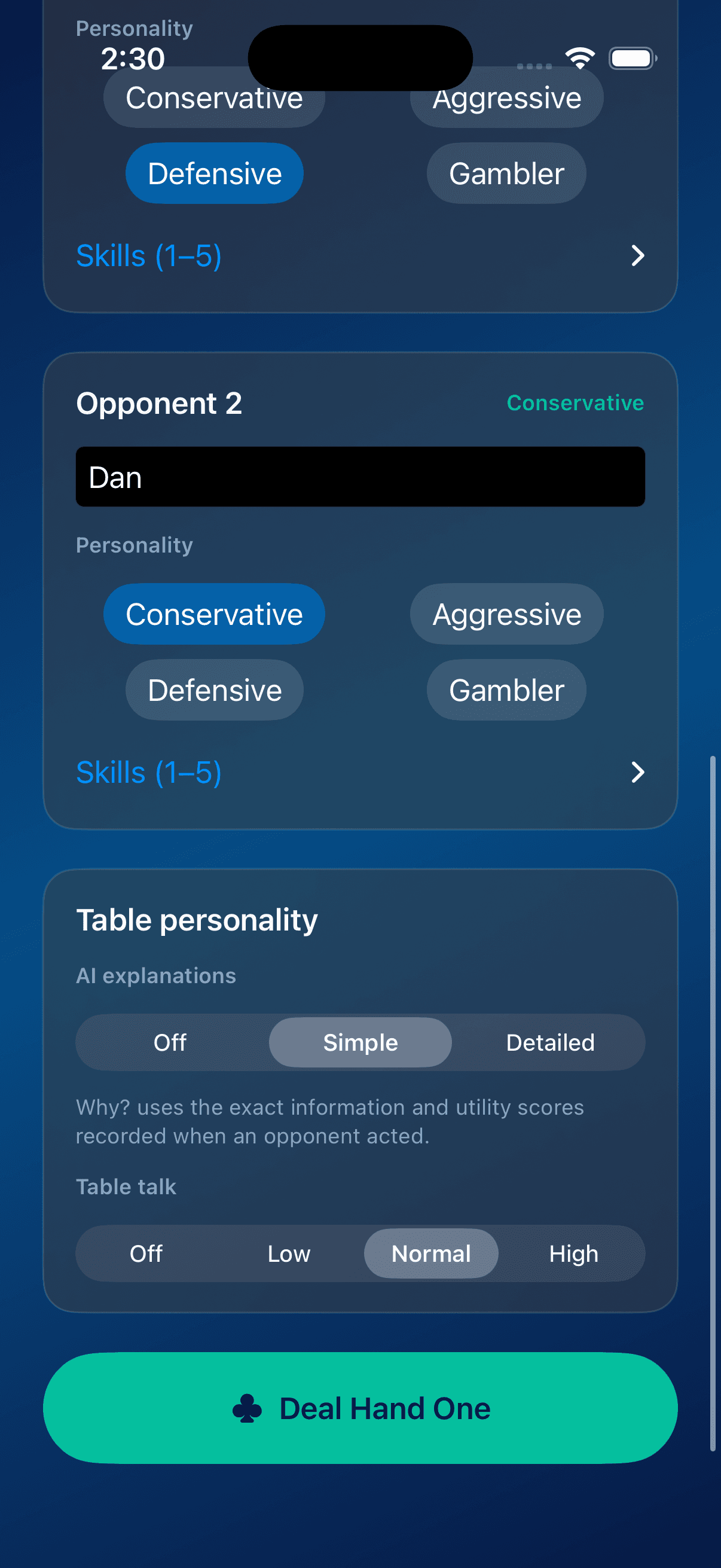
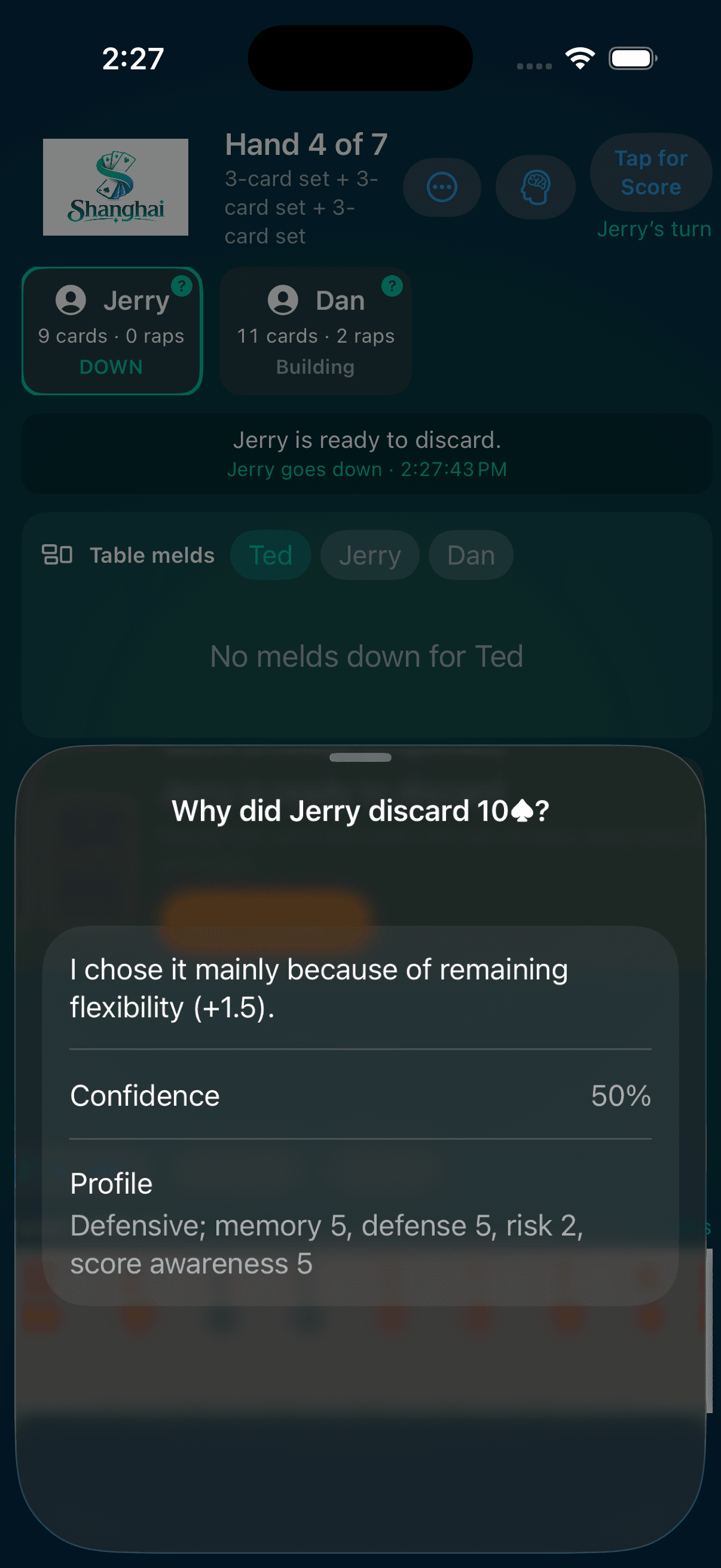
Each opponent can be assigned a personality and customized across nine separate behavior attributes.
Remembers what others appear to need and may deny useful cards.
Tends to reduce risk and avoid unnecessarily large hands.
Pushes toward contracts quickly and raps more readily.
Accepts larger hands and speculative plays in pursuit of a bigger payoff.
Tune Memory, Meld Skill, Defensive Play, Rap Aggression, Risk Tolerance, Score Awareness, Joker Strategy, Going-Out Skill, and Rap Timing from 1 to 5.
Questions
Shanghai supports two to five total players: one human player and one to four computer opponents.
Rapping lets an eligible player knock for a discard outside their normal turn. The next player still has first refusal. If that player declines, the first valid rapper receives the discarded card plus two stock cards and uses one of their two raps for the hand.
Each computer opponent maintains its own memory, beliefs, personality, and nine skill attributes. They respond only to information that player could legitimately know; they do not share hidden hands, intentions, or a common omniscient strategy.
Yes. You can choose an opponent personality and independently adjust nine behavior attributes from 1 to 5, including memory, meld skill, defensive play, rap aggression, risk tolerance, score awareness, joker strategy, going-out skill, and rap timing.
Shanghai automatically saves the current game and supports exact resume. You can also explicitly Save and Exit, restart the current hand while keeping earlier scores, or restart the entire game.
Strategy. Solutions. Impact.
Find troubleshooting guidance, privacy information, terms, and a direct support email.