Frame the decision
Clarify objectives, federal and local rules, stakeholders, operational constraints, and the alternatives that matter.
Public policy and consulting
AvachaTech develops policy, analyzes household and financial impacts, and carries decisions through public materials, business processes, systems, data conversion, and rollout.
Established work spans Moving to Work, rent reform, asset building, landlord incentives, payment standards, utility allowances, Housing Choice Voucher operations, and related systems.
From policy choice to operating reality
Clarify objectives, federal and local rules, stakeholders, operational constraints, and the alternatives that matter.
Analyze household, financial, demographic, equity, and disparate impacts using the strongest available data.
Translate the work into policy language, board materials, presentations, and understandable public explanations.
Update procedures, software, data, workflows, controls, training, and project plans.
Coordinate staff, vendors, milestones, decisions, risks, budgets, and conversion activity.
Use operating and outcome information to understand what changed and where the process needs refinement.
Proprietary technology
AvachaTech develops proprietary applications that help public agencies and affordable-housing organizations evaluate policy choices, understand operational and financial consequences, and manage complex programs over time.
These tools grew from direct experience with the policy, analytical, reporting, and oversight challenges our clients encounter. They can support a specific engagement or provide an ongoing framework for analysis and decision-making.
Policy impact modeling
Virtual Impact Analysis, or VIA, helps Public Housing Authorities make informed policy decisions by analyzing data they already collect.
VIA allows agencies to model proposed rent, subsidy, occupancy, eligibility, and program-rule changes; evaluate effects on households and agency finances; examine impacts across demographic groups; and compare multiple policy alternatives before implementation.
The application is available for both MTW and non-MTW agencies.
Public-policy work does not end when a program is approved. Affordable-housing organizations must monitor property performance, financial obligations, reserves, loans, bonds, fees, and compliance requirements over many years.
Affordable-housing asset oversight
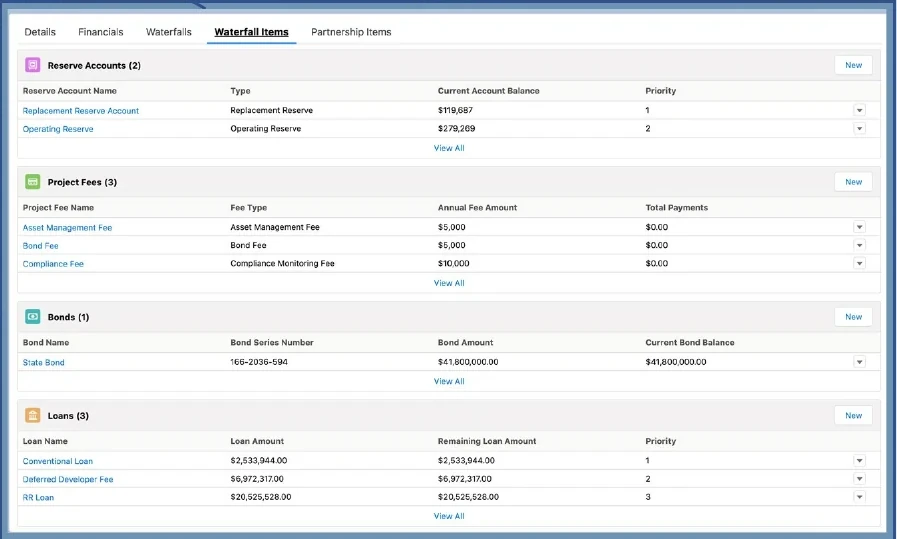
Financial Waterfall is AvachaTech's Salesforce-based application for tracking the financial and operational performance of affordable-housing properties.
The application brings together waterfall projections, loans, bonds, reserve and capital accounts, project fees, agreement terms, performance indicators, and property-level reporting in a structured system.
It helps organizations move beyond fragmented spreadsheets and gain a clearer view of both current balances and future financial obligations.
Consulting and technology
VIA and Financial Waterfall reflect AvachaTech's approach to public-sector technology: begin with the policy or operational decision, understand the data and requirements behind it, and build a practical system that helps people act on the results.
Our work can include policy analysis, application configuration, data preparation, reporting, implementation support, and ongoing refinement.
Representative work
2025 Housing authority
A housing authority needed a district-level view of affordable-housing resources and the households served across a city.
2024–25 Statewide housing administrator
A statewide administrator needed a clearer way to move households with severe mental illness from short-term to long-term housing subsidy.
2024 Large housing authority
A large housing authority commissioned an independent assessment of its Moving to Work program, active initiatives, and recent program changes.
Strategy. Solutions. Impact.
AvachaTech helps organizations understand choices, communicate consequences, and carry decisions into practice.